How to Price Your Brand Deals (Without Guessing)
How to price your brand deals without second-guessing yourself
Every creator hits the same wall the first time a brand slides into their inbox with "what are your rates?" Quote too low and you are working for free once you count the hours. Quote too high with nothing to back it up and the brand quietly moves on to someone else. The good news is that pricing a brand deal is not guesswork. It is a calculation, and once you know the inputs, you can defend any number you send.
Start with what the deliverable actually costs you
Before you think about audience size or engagement rate, price the work itself. A single Instagram Reel is not the same job as a three-part YouTube integration with usage rights attached, so treat every deliverable as its own line item.
- Concept and scripting time - the hours spent planning the piece before a camera comes out.
- Production time - filming, photographing or writing the actual content.
- Editing and revisions - including however many rounds the brand has asked for in the brief.
- Usage rights - whether the brand can only use the content on your own channel, or wants to run it as a paid ad across their own accounts for the next twelve months.
- Exclusivity - if you are being asked to sit out competitor campaigns for a period, that is a separate fee, not a favour.
Add these up at your hourly rate first. This is your floor. Nothing should go out the door for less than this number, regardless of how flattering the brand's name looks in your inbox.
Then layer in your audience and your niche
Your floor covers your time. What lifts a quote above it is the audience you are putting in front of the brand, and how much competition exists for that audience. This is where niche matters more than raw follower count. Get Blogged's own creator directory currently lists 464 creators under Lifestyle & Everyday Living alone, against 87 in Fitness & Training, 83 in Beauty & Skincare, 82 in Food & Recipes, 77 in Fashion & Style and 65 in Business. A brand briefing a tightly defined niche with fewer active creators to choose from has less room to negotiate you down, and you should price accordingly.
Practically, that means asking yourself two questions before you name a figure:
- How specific is my audience to this brand's actual customer, rather than just a broad demographic match?
- How many other creators in my niche could deliver a similar result, and how does my engagement rate compare to theirs?
A smaller, sharply defined audience in a thin niche is frequently worth more per deliverable than a large generalist following, because the brand is not just buying reach. It is buying relevance.
Package your rate card so brands stop haggling
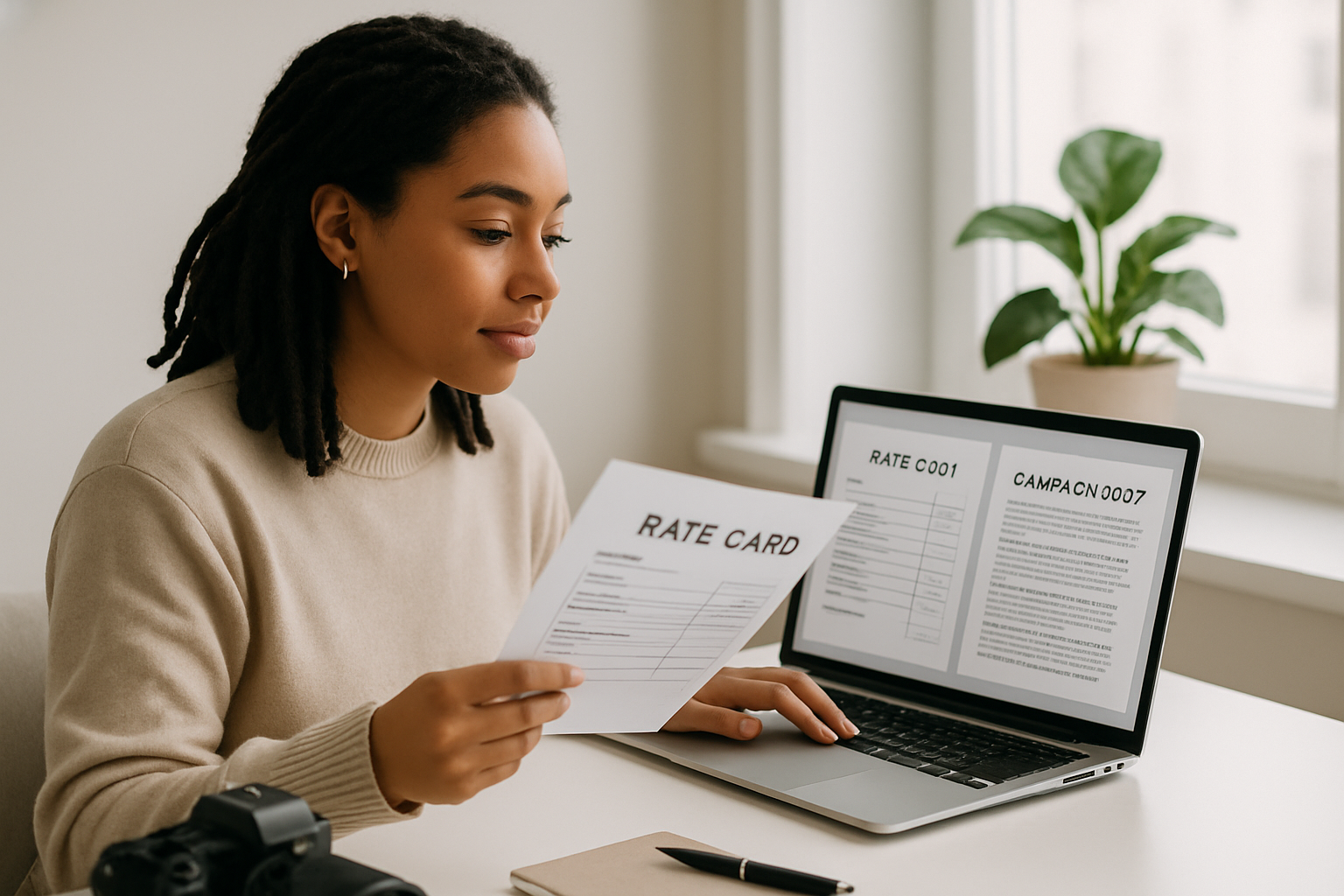
Vague pricing invites negotiation. A clear rate card shuts it down. Structure yours by deliverable type with a base price for each, then list your add-ons separately: usage rights, whitelisting, exclusivity, expedited turnaround. When a brand asks for a bundle, you simply add the line items together rather than inventing a number on the spot.
This also protects you mid-campaign. If a brand comes back three weeks later wanting to extend usage rights or repurpose your content in a new format, your rate card already has a price for that, so it is a quick add-on conversation rather than a renegotiation from scratch.

Do not forget these three pricing mistakes
- Pricing against follower count alone. Two creators with identical follower numbers can have wildly different conversion rates. Price on results and relevance, not on the size of the number in your bio.
- Leaving usage rights undefined. If a brand does not specify how long or where they can use your content, assume they will use it as widely as possible and price the licence to match, or state the limit yourself in the contract.
- Quoting before you have the full brief. A one-line request deserves a one-line "send me the full brief and I'll quote accordingly," not a number typed under pressure.
Revisit your rates as your work builds up
Your rate card is not fixed forever. Every completed campaign, every case study, every improvement in your engagement numbers is evidence to raise your baseline. Review your pricing every few months rather than waiting for a brand to ask why you have not moved in two years.
If you want your rate card in front of brands actively briefing in your niche, rather than pricing in a vacuum, list your profile on Get Blogged and start receiving briefs matched to your niche and audience.