
How The Little Box of Mindfulness Reached Page One of Google for £460
A founder rebuilt his life around kindness, then built his store's search visibility the same way - 11 carefully chosen link placements, £460, and page-one rankings for both target keywords.
When James Marchant launched Little Box of Mindfulness, he had two decades of marketing experience and a brand-new website with zero authority in Google's eyes. Rather than renting visibility through ads or marketplaces, he spent £460 on carefully chosen blogger link placements through Get Blogged. His store now appears on page one for both of the keywords he set out to win.
A business born from a difficult chapter
The Little Box of Mindfulness wasn't born from a gap-in-the-market analysis. After twenty years running a busy design and marketing business, James burnt out - and while dealing with his mum's illness, he sought counselling. Those experiences changed how he thought about mental wellbeing, and about what people actually need from each other in hard times.
People rarely expect you to fix what they're going through. More often, they simply want to know they haven't been forgotten. Sometimes the smallest gesture can mean the most.
— James Marchant, founder
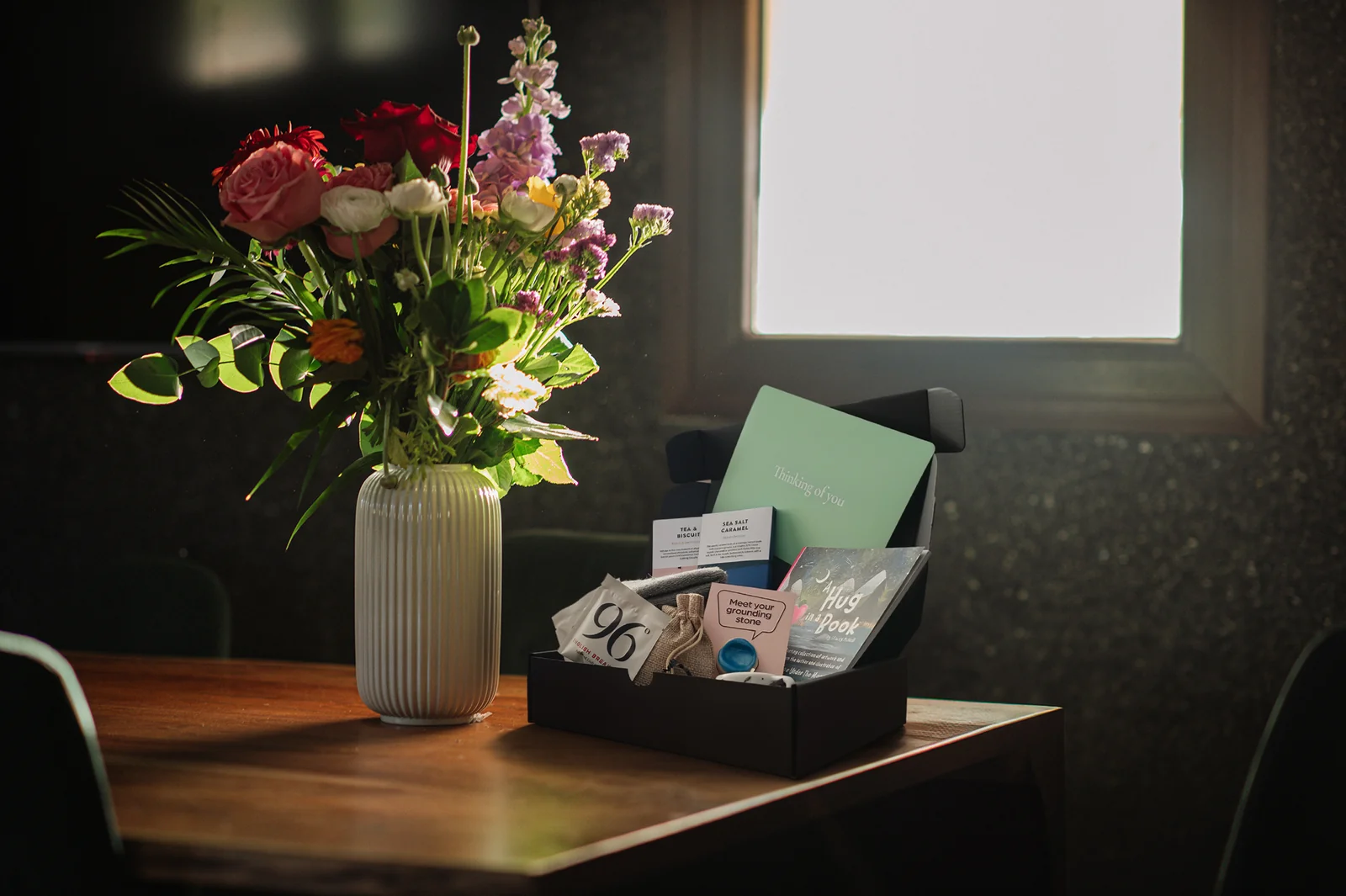
The result is a store built around one idea: a thoughtful gift that says "I'm thinking of you" to someone who is struggling, grieving or anxious - even anonymously, because sometimes the kindness matters more than who it came from.
Why a marketing veteran chose blogger outreach over ads
James was clear from day one that the business would live on its own website, not inside somebody else's marketplace. He'd seen too many businesses become dependent on a single platform, paying ever-higher fees just to be seen. Owning the site and building traffic through Google - and increasingly AI search - was the long game he chose, knowing it would take longer.
The catch with a brand-new domain is authority. Great products and a well-designed site count for little in search until established, relevant websites start pointing to yours. That's what brought him to Get Blogged: access to genuine publishers in wellbeing, gifting and lifestyle niches, and contextual backlinks from real, indexed blogs - not a quick traffic spike, but an investment in the store's independence.
The brief: quality over quantity
The budget was deliberately modest - £150 to £200 a month, enough for three to five quality placements. The brief was strict: well-established blogs, genuinely relevant to wellbeing, gifting or lifestyle, with links sitting naturally in the body of indexed articles. Relevance mattered as much as authority, because the links had to look like what they were - natural mentions.
The response surprised him. His first campaign drew 17 proposals, the second 21 - 38 in total, from which he hand-picked 11. Pricing and quality varied widely, and the biggest lesson of his first two campaigns was learning to look past headline metrics: the highest Domain Authority isn't automatically the best opportunity, and some of the best-value placements came from blogs that simply fitted the brand perfectly.
"Every blogger I've worked with has been polite, easy to communicate with and genuinely interested in helping create a placement that works well for both of us. As someone using the platform for the first time, that made the whole process feel straightforward and enjoyable."
The results: page one, on a founder's budget
James targeted two phrases with a combined monthly search volume of around 1,200: "mental health gift" and "mindfulness gift". According to both SE Ranking and Google Search Console, his collection of mental health gifts now appears on page one for those searches far more often than before the campaigns - with recent tracking showing positions 3 and 4 respectively, alongside page-one spots for several related terms. Impressions in Search Console have climbed steadily over recent months.
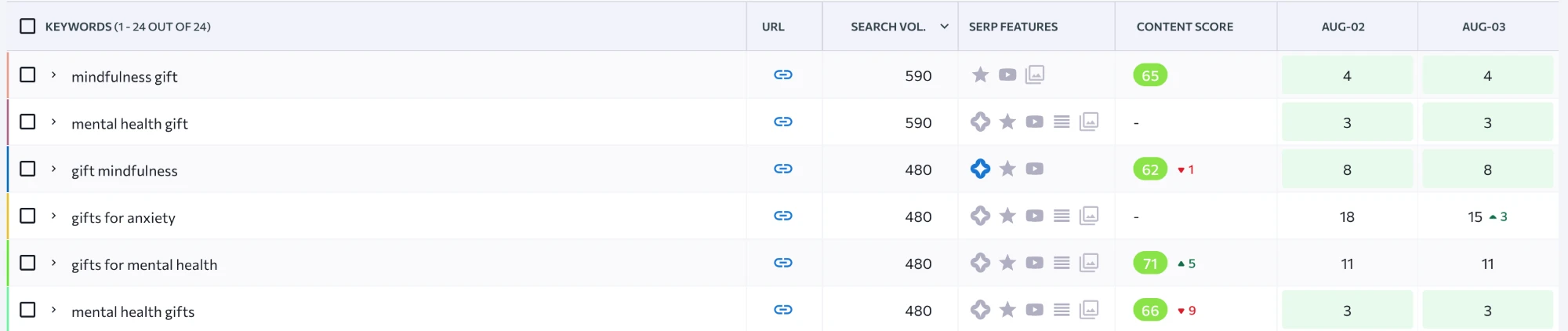
James is careful about what he claims: rankings move around, SEO is a long-term investment, and the links are one part of a strategy that also leans on quality content and solid technical SEO. But the foundation is doing exactly what he paid for - sustainable organic growth that doesn't depend on ad spend or a marketplace's goodwill.
His advice for founders on a limited budget
What's next
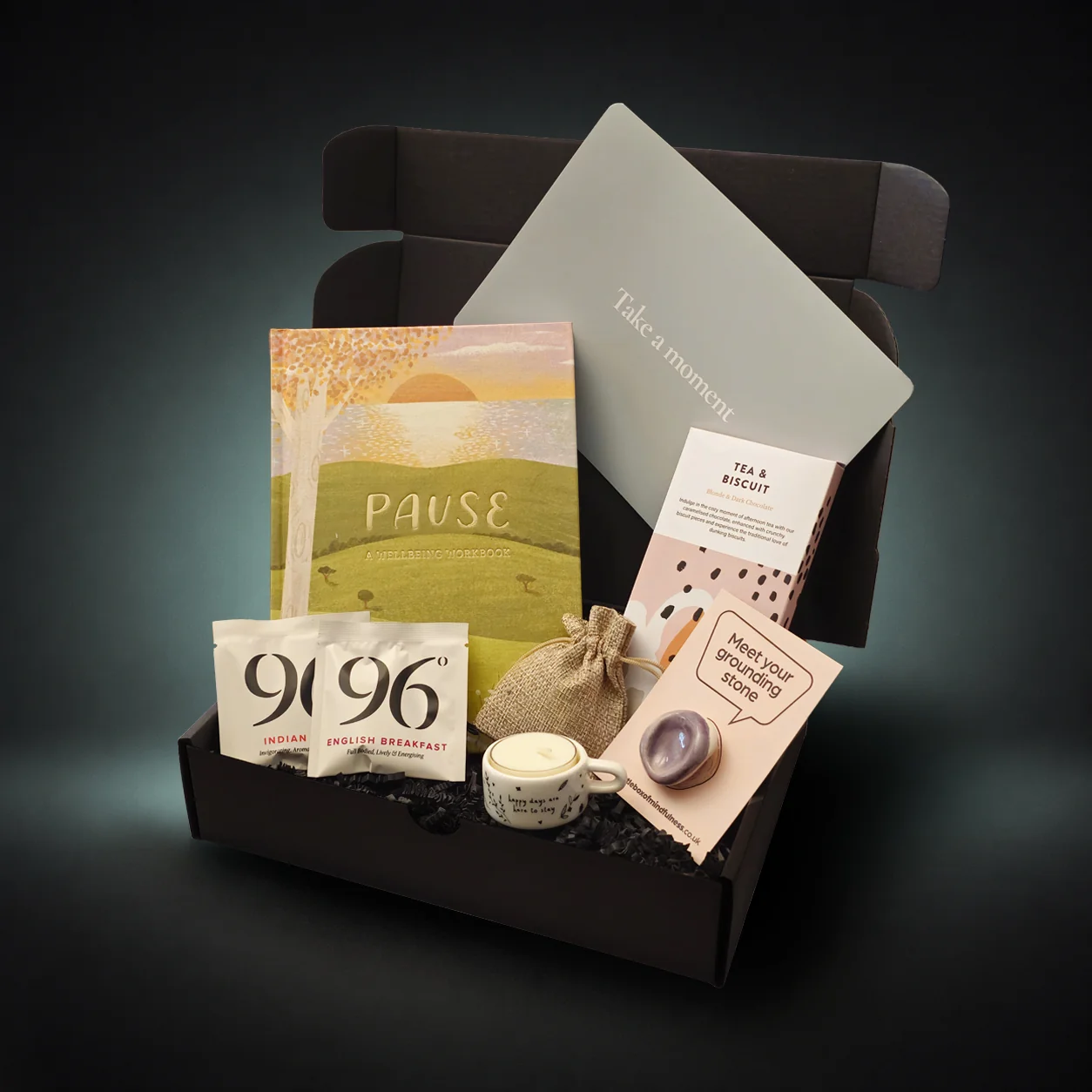
With a new range of curated gift boxes just launched, James is expanding beyond link insertions into product reviews, gift guides and fuller blogger collaborations - plus a growing corporate side, helping employers show their teams they're valued. The ambition reaches past commerce: more conversations about mental wellbeing, and support for a local mental health charity along the way.
If I can build a successful business while helping people show kindness, I'll feel like I've achieved something that really matters.
— James Marchant
The full interview
The story above draws on a written interview with James Marchant, founder of The Little Box of Mindfulness. His full answers are published below.
Tell us about The Little Box of Mindfulness - what is it, and what made a marketing consultant start his own e-commerce venture?
The Little Box of Mindfulness wasn't born from spotting a gap in the market or writing a business plan. It came from a period in my own life where everything changed.
For over twenty years I ran a busy design and marketing business. Like a lot of people, I convinced myself that stress was simply part of success. Eventually it caught up with me. I burnt out, and around the same time I was also dealing with my mum's illness, which led me to seek counselling. Those experiences completely changed how I thought about mental wellbeing and the way we support each other.
One of the biggest things I realised was that people rarely expect you to fix what they're going through. More often, they simply want to know they haven't been forgotten. Sometimes the smallest gesture can mean the most.
That's really where The Little Box of Mindfulness began. I wanted to create something that made it easy for people to reach out to someone who might be struggling, grieving, feeling anxious or simply having a difficult time. A thoughtful gift that says, “I'm thinking of you,” even when you don't know the right words. I even wanted people to be able to send a box anonymously, because sometimes it's the kindness itself that matters more than who it came from.
Although my background is in marketing, this business feels very different. It's personal. Every product, every message and every box is designed around one simple idea: helping people show someone they care.
With your background you could have chosen any channel - why blogger outreach for a brand-new store, ahead of paid social or ads?
Having worked in marketing for many years, I knew from the outset that I wanted to build The Little Box of Mindfulness as a direct-to-consumer business through its own website.
I didn't want to become overly reliant on marketplaces or other platforms where you're competing within a closed ecosystem, paying increasingly high fees and often having to spend even more money just to get your products seen. I'd also read enough horror stories about businesses becoming completely dependent on one platform to know that wasn't the route I wanted to take.
For me, owning the website and, importantly, building our own traffic through Google and now AI search was always the direction I wanted to go, even if I knew it would take longer.
The challenge with a brand-new website is authority. You can have great products and a well-designed site, but without that authority it's incredibly difficult to compete in search.
That's what led me to GetBlogged. It gave me access to genuine publishers in niches relevant to the business and allowed me to start building contextual backlinks from established websites. I wasn't looking for a quick spike in traffic; I was investing in the long-term visibility and independence of the business.
As Little Box of Mindfulness grows, I'm now starting to look at fuller blogger collaborations, reviews and competitions too, but building that SEO foundation first felt like the right place to start.
Walk us through your first campaign: the brief, roughly what you budgeted, and what came back.
Because my initial goal was SEO rather than product awareness, my first campaigns were focused on securing high-quality contextual link insertions on relevant blogs.
Rather than chasing the cheapest links I could find, I set a clear brief. I wanted placements on genuine, well-established blogs that were relevant to wellbeing, gifting and lifestyle. Relevance was just as important to me as the authority of the blog because I wanted the links to look completely natural.
My budget wasn't huge, typically around £150–£200 a month. That was usually enough to secure three to five quality placements on relevant blogs. As a new business, every pound mattered, so I focused on quality over quantity.
What impressed me was the response. Most campaigns attracted interest from more than 20 bloggers who felt their blogs would be a good fit. There was quite a range in pricing, authority and overall quality, so I spent time reviewing each opportunity carefully. Some represented excellent value, while others simply weren't the right fit for my budget or objectives.
Once the placements went live, I started to see improvements in keyword rankings and, over time, an increase in organic traffic from Google. That was exactly what I'd hoped to achieve by investing in SEO from the very beginning.
How do you choose which bloggers to work with - what do you look at?
Because my focus so far has been on SEO rather than product reviews, the first thing I look for is relevance. I want blogs that naturally write about wellbeing, gifting, lifestyle or similar topics, because those are the blogs that make the most sense for Little Box of Mindfulness.
Domain Authority is important, but it's only one part of the decision. I also look at the overall quality of the blog, whether it's well written, regularly updated and has content that feels genuine rather than being created purely for SEO.
Finally, I look at value for money. A blog might have a high Domain Authority, but if the price doesn't represent good value, I'll move on. Equally, I've found some fantastic blogs that offered excellent value and were a perfect fit for my budget.
As I start using blogger reviews as well as link insertions, audience fit will become much more important. I'll be looking for bloggers whose readers are genuinely interested in thoughtful gifting, as they're the people most likely to enjoy discovering the brand.
How many collaborations have you run so far, and what does a typical one cost you?
So far, I've secured 11 link insertions across two campaigns. The first campaign attracted 17 proposals, from which I selected six bloggers. The second received 21 proposals, and I chose five.
In total, I've spent £460. That works out at an average of just under £42 per placement, although I assess every proposal individually rather than working to a fixed price.
The spending has been spread over several months: five placements in March cost £214.50, one in April cost £45.50, four in June cost £160, and one so far in July cost £40.
One thing that has really stood out is how helpful and professional the bloggers have been. Every blogger I've worked with has been polite, easy to communicate with and genuinely interested in helping create a placement that works well for both of us. As someone using the platform for the first time, that made the whole process feel straightforward and enjoyable.
For a new business, that level of investment has felt manageable. It has allowed me to build a growing portfolio of relevant backlinks without committing a huge amount of money to any single campaign. The number of proposals also means I can be selective rather than feeling pressured to accept opportunities that aren't the right fit.
The results question: what movement have you seen in Google rankings or organic traffic?
Because The Little Box of Mindfulness is still a new business, I wasn't expecting overnight results. SEO is a long-term investment and rankings naturally go up and down, especially when you're starting with zero trust from Google.
My focus has been on two key phrases, “mental health gift” and “mindfulness gift”, which have a combined monthly search volume of around 1,200. The two link insertion campaigns formed an important part of my wider SEO strategy to improve my visibility for those searches.
According to both SE Ranking and Google Search Console, I'm now appearing on page one for those keywords far more often than before the campaigns. That's significant because first-page rankings receive dramatically higher click-through rates than page two or three, where very few people ever look.
Google Search Console also shows a steady increase in impressions over recent months, giving me confidence that the website's authority is growing. For me, strong SEO comes from three things working together: quality content, solid technical SEO, and strong, relevant backlinks. The contextual links I've secured through GetBlogged have been an important part of that strategy, helping to build a stronger foundation for the business. My goal has always been to create sustainable organic growth, building a brand that isn't reliant on paid advertising or third-party platforms for its sales.
What surprised you - good or bad?
I was pleasantly surprised by both the quality of the bloggers and the number of proposals I received. Across my two campaigns I had 38 proposals to choose from, which meant I could be selective rather than feeling I had to accept every opportunity.
Every blogger I've worked with has been friendly, professional and easy to communicate with. As someone using link insertions for the first time, that made the whole process much more enjoyable than I expected.
The only real challenge was deciding which proposals to accept. There was a big difference in pricing and value, and I quickly realised that the highest Domain Authority doesn't always make it the best opportunity. Some proposals simply didn't represent good value for my budget, while others were an excellent fit for both my brand and my SEO strategy. Learning to look beyond the headline metrics was probably the biggest lesson from my first two campaigns.
What would you tell another founder with a limited budget who's considering blogger outreach?
If you've got a limited budget, don't try to do everything at once. I'd rather secure a handful of high-quality, relevant link insertions than dozens of cheap ones.
Before you spend any money, decide which search terms you actually want your business to be found for. Do your research and choose keywords that are realistic. It's tempting to target the biggest search volumes, but if the first page is dominated by huge brands with thousands of pages and years of authority behind them, you're unlikely to compete straight away. I'd rather target a slightly lower-volume keyword that I have a genuine chance of ranking for.
When reviewing proposals, I always check that the website is genuinely relevant to my business, that the backlink will be do-follow, that the article is already indexed by Google, and that the link will appear naturally within the main body of the content. If the article isn't indexed, I'd simply walk away.
Most importantly, be patient. SEO is a long-term investment, not a quick win. Quality content, solid technical SEO and strong, relevant backlinks all work together over time. My goal has always been to build a business that generates sustainable organic traffic rather than one that's dependent on paid advertising or third-party marketplaces for its sales.
What's next for the brand?
I've recently launched an entirely new range of thoughtfully curated gift boxes, so my immediate focus is making more people aware of them. SEO will continue to play a huge part in that, but I'm also looking forward to expanding my use of GetBlogged beyond link insertions. I'd love to work with bloggers who have engaged audiences through product reviews, gift guides and genuine collaborations that introduce Little Box of Mindfulness to more people.
I'd also like to grow the corporate side of the business. More employers are recognising the importance of supporting their staff's wellbeing, and I'd love to create thoughtful gifts that encourage people to pause, reflect and learn more about mindfulness, whether that's as part of Mental Health Awareness Week or simply as a way of showing employees they're valued.
Most importantly, I'd like The Little Box of Mindfulness to become more than just a gift business. Life has thrown a few curve balls my way over the years. I've watched family and friends go through difficult times, and I've experienced periods where I needed support myself. Those experiences are what inspired me to start the business in the first place.
That's why this has never been just about making money. If I can build a successful business while helping people show kindness, encouraging more conversations around mental wellbeing, and supporting a local mental health charity along the way, I'll feel like I've achieved something that really matters.